
Buying a Vineyard in Portugal: Best Wine Regions
LAST UPDATED: SEPTEMBER 2026
12 MIN READ
Quick answer: Three of the most interesting regions in Portugal for buying a quinta are the Douro Valley for prestige and historic heritage, Alentejo for larger estates and attractive land value, and the Algarve for a coastal lifestyle and boutique winemaking potential. Each region comes with different DOC designations, pricing structures, and ownership models, which we explore below.
A vineyard in Portugal can mean many things: from a country home with its own vines to a fully operational wine estate with its own wine brand. Three of the most interesting regions for buying a quinta are the Douro Valley for prestige and historic heritage, Alentejo for scale and value, and the Algarve for a coastal lifestyle and boutique potential.
Here is how the three regions differ and what buyers should look for during their search.
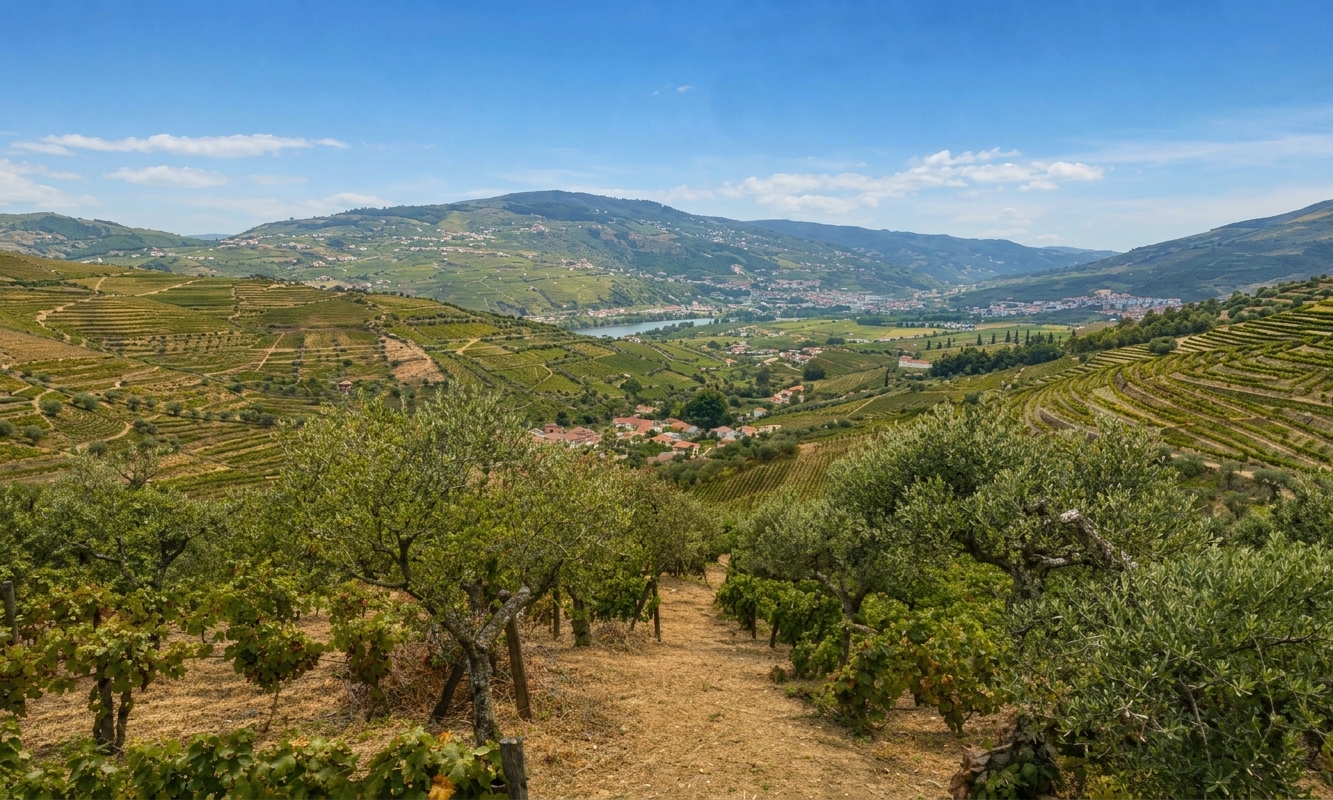
What Is a Quinta, and What Does DOC Mean?
A quinta is a Portuguese country estate or agricultural property. It may include vineyards, olive groves, orchards, a main house, and agricultural outbuildings, so it does not have to be exclusively a wine estate. It often also includes an adega, or wine cellar, where wine can be stored or produced.
DOC stands for Denominação de Origem Controlada. It is a protected designation of origin for wines produced within a clearly defined region and according to specific rules and standards. The designation applies to the wine itself. It is not automatically attached to a property and does not automatically guarantee a new owner production or marketing rights.
Understanding the DOC system helps buyers better assess a vineyard's existing status and its position within the relevant wine region.
The Best Wine Regions in Portugal
Wine region: Douro Valley
Known for: Port wine, UNESCO terraces
Landscape: Steep river valley
Best for: Prestige and historic heritage
Wine region: Alentejo
Known for: Full-bodied red wines, cork oaks
Landscape: Wide plains
Best for: Large estates and value
Wine region: Algarve
Known for: Four DOC areas, boutique producers
Landscape: Countryside near the coast
Best for: Coastal living and boutique potential
Three regions, three very different reasons to buy.
Portugal's Main Wine Regions Compared for Quinta Buyers
Region: Douro Valley
Main advantage: International recognition and established wine infrastructure
Biggest challenge: Higher maintenance demands on steep vineyard terraces
Suitable for: Buyers seeking historic heritage and a serious wine project
Typical property profile: Higher entry prices for established DOC wine estates
Region: Alentejo
Main advantage: Larger estates and land that allows efficient management
Biggest challenge: Summer heat and water management
Suitable for: Buyers seeking space, privacy, and development possibilities
Typical property profile: Often more land for the budget compared with the Douro
Region: Algarve
Main advantage: Airport access and proximity to the coast
Biggest challenge: Fewer registered vineyards available on the property market
Suitable for: Lifestyle buyers seeking a home near the coast with their own vines
Typical property profile: Residential value strongly influenced by coastal location
Douro Valley: History and Prestige
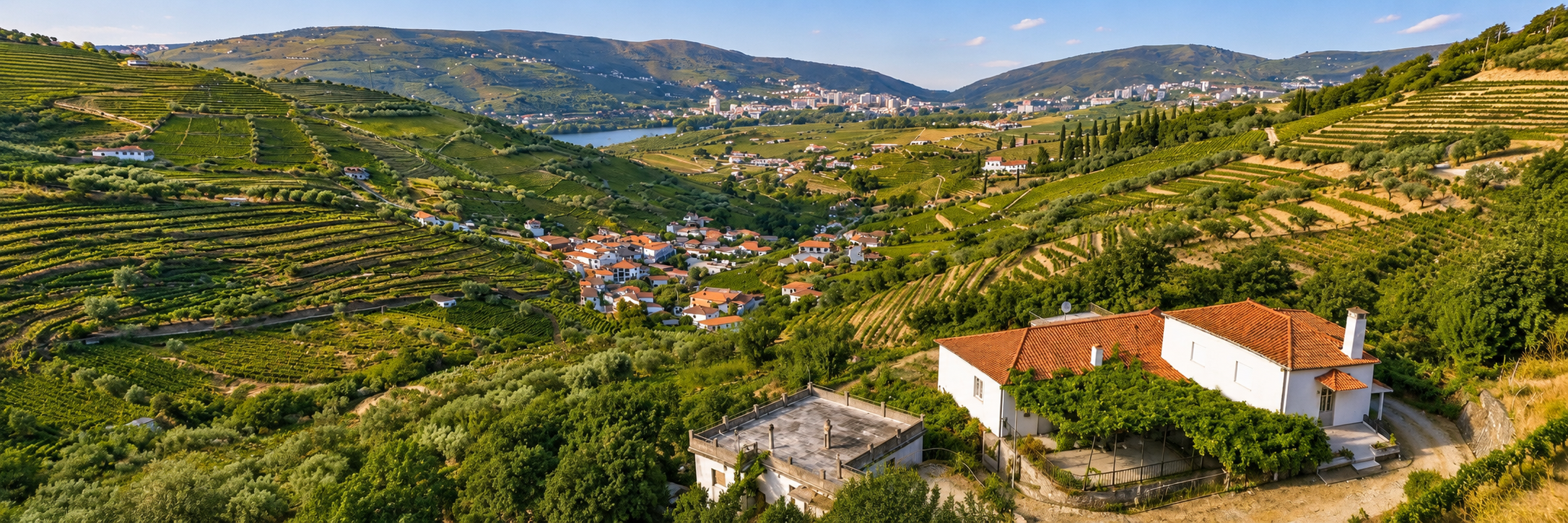
The Douro Valley is a UNESCO World Heritage Site and Portugal's oldest demarcated wine region. Best known for Port wine and its steep schist vineyard terraces, it attracts buyers looking for a serious wine project.
A harvest morning among your own vines. A glass of Douro red on the terrace with the river below. It is the kind of ownership story people enjoy sharing over dinner.
Registered DOC wine estates with a habitable home do not come to market particularly often. Timing and the region's special status therefore matter.
Where to live: Peso da Régua, Pinhão, or Lamego.
Best for: Buyers seeking international prestige, historic heritage, and a working estate in a globally recognized wine region.
Alentejo: More Land and Space
Alentejo is a warm, dry region of rolling plains, cork oaks, and olive groves. It is known for full-bodied red wines made from native grape varieties such as Aragonez and Trincadeira. Wine has been produced in Alentejo since ancient times.
Barrel tastings in a cool stone adega. A driveway through a cork-oak forest. And enough space without someone living immediately next door.
Compared with the Douro, buyers typically get more land and a lower price per hectare, although without the same level of international recognition.
Where to live: Évora, Borba, or Reguengos de Monsaraz.
Best for: Buyers seeking larger estates, commercial potential, and a quiet rural lifestyle.
Algarve: Boutique Winemaking and Coastal Living
The Algarve is one of Portugal's smaller and lesser-known wine regions. It has four traditional DOC areas: Lagos, Portimão, Lagoa, and Tavira, alongside a growing community of boutique wine producers.
A wine tasting on the terrace looking toward the Atlantic. The beach twenty minutes away. And a local wine community small enough that you can actually get to know the producers.
Compared with the Douro or Alentejo, the Algarve is a smaller, developing wine region. For buyers who want to combine boutique winemaking with life near the coast, that can be exactly what makes it interesting.
Where to live: Lagos, Portimão, or Silves.
Best for: Buyers looking to combine a boutique vineyard with coastal living and good accessibility.
Working Quinta or a Home in a Wine Region?
Some buyers want the full experience: the harvest, the wine cellar, and perhaps even a label with their own name. Others want to enjoy the estate without taking on all the daily work. You could, for example, lease registered vineyard land to a local producer or appoint professional management.
For some buyers, the vines themselves are the project. For others, living in a wine region is the priority.
Do you want to produce your own wine, or simply own a piece of a region you love? How often would you realistically visit a remote Douro estate compared with an Algarve property only fifteen minutes away? Is this a long-term family holding, an investment, or somewhere you plan to live for much of the year?
A property that remains practical and rewarding long after harvest season is essential for long-term value and quality of life.
Winemaking Models for a Quinta
When buying a wine estate in Portugal, buyers generally consider four basic models:
- Independent production on the estate: You manage the entire process on site, from vineyard care and harvest through winemaking in your own adega to bottling and selling under your own brand. This model offers maximum control but requires expertise, equipment, and the appropriate licenses.
- Contract winemaking: You grow your own grapes on the estate and then work with an established winery that produces and bottles the wine under your own brand. This makes it possible to have your own wine label without fully investing in cellar equipment.
- Selling the grapes: You keep the vineyard and sell the harvested grapes to neighboring wineries, regional cooperatives, or commercial producers. The vines remain active without you having to enter wine production yourself.
- Managed or leased vineyard: You lease the vineyard land to an outside producer or appoint a vineyard-management company. The team handles cultivation and harvest while you enjoy the estate and rural lifestyle without daily agricultural responsibilities.
A Douro Wine Estate for Sale
If a vineyard is part of your property search, this estate currently offered through Lagos Homes shows what a genuine working wine estate in the Douro can look like.
DOC Douro Wine Estate, Cambres
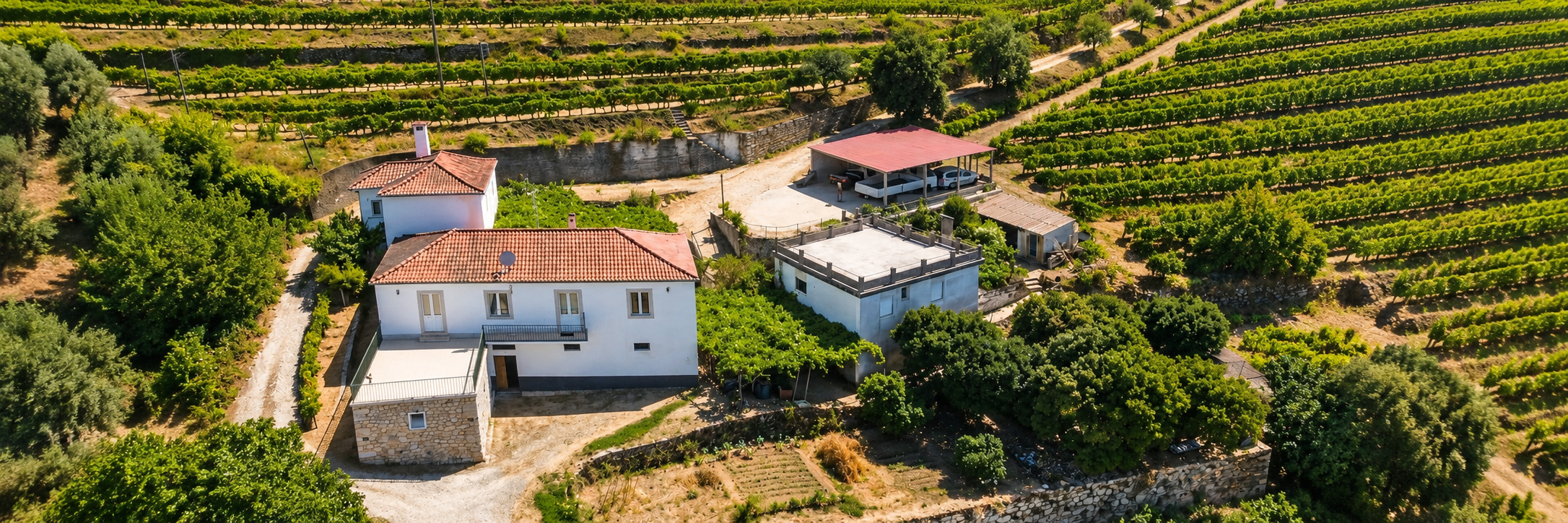
From the terrace, the vineyards stretch toward the Douro while Peso da Régua can be seen in the distance. The estate combines 4.4 hectares of registered vineyard within the Douro Demarcated Region with an existing adega and agricultural outbuildings.
- Three secure access points to the vineyard.
- Five-bedroom main house dating from 1951, a working adega, storage areas, and agricultural buildings.
- A separate house for a caretaker, guests, or staff, providing additional flexibility.
- Five minutes from the historic center of Lamego and ten minutes from the riverfront in Régua, near Quinta da Pacheca and the Six Senses Douro Valley Hotel.
Explore the details of this DOC Douro wine estate in Cambres, Lamego.
Properties combining a habitable home with registered Douro vineyard land are rare on the market. This estate provides a genuine foundation for developing a private wine project, subject to the required registrations.
Asking price: €800,000 | Ref. LH103
View the property details or contact Lagos Homes for a private consultation.
Lagos Homes · Douro Wine Estate
Interested in This Wine Estate?
Contact us for more information about this DOC Douro wine estate or to discuss your property search in Portugal.
LAGOS HOMES →PRIVATE CONSULTATION →What to Check Before Buying a Quinta in Portugal
A short, practical checklist:
- DOC status: Is the property officially within a DOC area, or is it only classified as Vinho Regional?
- Existing vines: Are the vines already producing, or would you be starting with unplanted land?
- Water rights: How is the vineyard irrigated, and are the relevant rights secured?
- Buildings: Are the adega and outbuildings already usable, or do they need restoration?
- Licenses and rights: Does ownership include official production rights and vineyard registration with the relevant regional authorities, such as the IVDP in the Douro, or are additional approvals required?
- Your daily life: How far away are the nearest town, an airport, and everyday amenities?
One point is especially important: existing vines do not automatically guarantee the right to produce or bottle wine commercially. Check what is actually registered with the relevant regional authorities rather than relying solely on the property's current use.
Living in Portugal's Wine Regions: Everyday Life and Lifestyle
The real appeal is not only the asset on paper. It is also the life around the estate: walking through the vines in the morning, enjoying a wine tasting at lunch, and spending the afternoon in town or by the coast depending on the region.
This matters especially if you are buying with a partner or family and the property is primarily part of your lifestyle.
At Lagos Homes, we help international buyers compare properties based on how they actually want to live in Portugal.
If a vineyard is part of your plans, you can explore our current rural properties and country homes or arrange a private buyer consultation.
Lagos Homes · Buyer Consultation
Looking for a Quinta in Portugal?
We help international buyers compare wine estates, rural properties, and country homes according to the lifestyle and ownership model they are looking for.
EXPLORE LAGOS HOMES →SCHEDULE A CONSULTATION →Frequently Asked Questions
Which Wine Regions in Portugal Are Best for Buying a Quinta?
The Douro Valley, Alentejo, and the Algarve are three key regions buyers should know. The Douro offers centuries of wine tradition in a dramatic river landscape, while Alentejo and the Algarve offer very different rural and residential opportunities.
What Does DOC Mean in Portuguese Wine?
DOC stands for Denominação de Origem Controlada. The designation identifies wines from a clearly defined region produced according to specific rules concerning grape varieties, yields, and production methods. Owning a vineyard within a DOC area does not automatically guarantee that wine produced there may use the designation.
How Much Does a Vineyard in Portugal Cost?
Prices vary significantly by region, size, and whether the vineyard is already producing. One current example is a registered DOC Douro estate with 4.4 hectares of vineyard and a five-bedroom house offered through Lagos Homes for €800,000 (Ref. LH103).
Is Buying a Vineyard in Portugal a Good Investment?
A vineyard can be an interesting investment, particularly when it is properly registered, actively managed, and supported by a viable model for production or grape sales. Financial performance, however, depends on the individual estate, operating costs, and production model. Independent legal, technical, and financial advice is therefore important.
Is the Algarve a Wine Region?
Yes. The Algarve is one of Portugal's smaller and lesser-known wine regions and has four traditional DOC areas: Lagos, Portimão, Lagoa, and Tavira. At the same time, the number of small boutique producers is growing.
Can Foreigners Buy a Vineyard in Portugal?
Yes. There are generally no broad restrictions on foreign ownership of rural property in Portugal. However, production licenses, registrations, and any planting rights should be checked individually for each property.
Is the Douro, Alentejo, or Algarve Better for a Quinta?
It depends on what you want from the property. The Douro offers international prestige and historic heritage. Alentejo offers large estates and space for agricultural projects. The Algarve combines smaller vineyard projects with coastal living and good international accessibility.
Where Can I Find Quintas and Vineyards for Sale in Portugal?
At Lagos Homes, you can explore currently available rural properties and country homes, including properties in and around Portugal's wine regions.
- F1 Portugal 2027: What It Means for Algarve Property Buyers
- Why Portugal Is a Top Destination for Expats Looking for a Home
- Buying a Vineyard in Portugal: Best Wine Regions
- Best Golf Courses Near Lagos & Where to Buy a Home
- Luxury Shopping in the Algarve: Best Boutiques & Designer Stores 2026
- The 7 Best Michelin Restaurants in the Algarve in 2026

